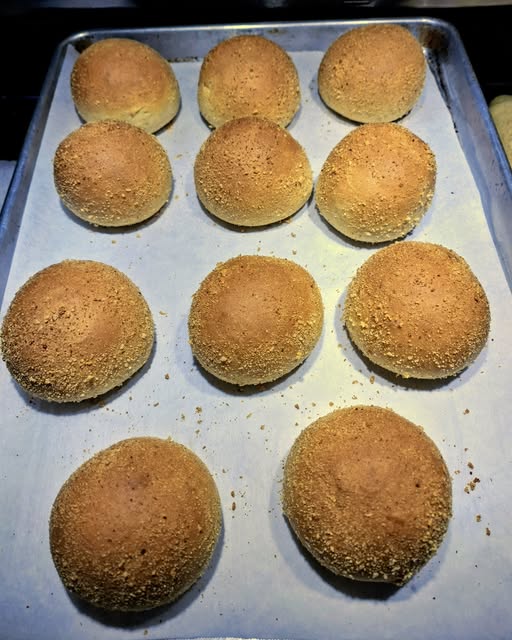
Freshly Baked Round Pandesal—the iconic, beloved Filipino breakfast roll. Known for its soft, pillowy interior, lightly sweet flavor, and signature golden-brown crust coated in fine breadcrumbs, a perfect pandesal is a masterpiece of simple baking.
Here’s a detailed, traditional recipe to achieve that classic, bakery-style pandesal at home.
What Makes Pandesal Special?
-
Pandesal means “salt bread” in Spanish, but it’s actually slightly sweet.
-
It’s a yeast-raised bread roll, enriched with milk, sugar, and a bit of butter or oil.
-
The double coating of breadcrumbs (not flour) before baking is its defining characteristic, giving it a distinctive look and a delightful, slightly crispy exterior that yields to a cloud-soft inside.
-
Traditionally baked in round, puffy shapes (not logs), and often torn open while hot.
Classic Round Pandesal Recipe
(Makes about 20-24 rolls)
Ingredients:
For the Dough:
-
2 ¼ teaspoons (1 packet / 7g) active dry yeast
-
1 cup lukewarm whole milk (110°F / 43°C)
-
½ cup (100g) granulated sugar
-
3 ½ cups (440g) bread flour (all-purpose flour works, but bread flour gives a better chew)
-
1 large egg, room temperature
-
⅓ cup (75g) unsalted butter, melted and slightly cooled (or ¼ cup neutral oil)
-
1 ½ teaspoons fine salt
For Coating & Topping:
-
½ cup fine dry breadcrumbs (Japanese panko ground finer in a food processor is perfect, or use store-bought fine breadcrumbs)
-
Extra breadcrumbs for dusting the pan
For the Egg Wash (Optional, for extra shine):
-
1 egg yolk + 1 tablespoon milk or water, beaten
Instructions:
Step 1: Activate the Yeast
-
In the bowl of a stand mixer (or a large bowl), combine the lukewarm milk, sugar, and yeast. Stir gently and let it sit for 5-10 minutes until frothy and bubbly.
Step 2: Make the Dough
-
Add the egg and melted butter to the yeast mixture. Mix with a dough hook on low speed (or a wooden spoon) until combined.
-
Add the bread flour and salt. Mix on low speed until a shaggy dough forms.
-
Increase speed to medium and knead for 8-10 minutes until the dough is smooth, elastic, and pulls away cleanly from the sides of the bowl. It will be slightly sticky but should form a soft ball. *(To knead by hand: turn onto a floured surface and knead for 12-15 minutes.)*
Step 3: First Rise (Bulk Fermentation)
-
Form the dough into a ball. Place it in a lightly oiled bowl, turning to coat. Cover with a damp cloth or plastic wrap.
-
Let rise in a warm, draft-free place for 1.5 to 2 hours, or until doubled in size.
Step 4: Shape the Pandesal
-
Lightly punch down the risen dough to release air. Turn it out onto a very lightly floured surface.
-
Weigh the dough and divide it into 20-24 equal pieces (about 40-45g each for 24 pieces). For perfectly round rolls, weighing is key.
-
Shape each piece into a tight, smooth ball:
-
Cup your hand over a piece of dough and roll it in a tight circular motion on the counter until the top is smooth and taut.
-
-
Pour the ½ cup of fine breadcrumbs into a shallow plate. Roll each dough ball in the breadcrumbs to coat evenly. Place them crumb-side up on a baking sheet lined with parchment paper that has been lightly dusted with more breadcrumbs. Space them about 1-1.5 inches apart; they should be close but not touching.
Step 5: Second Rise (Proofing)
-
Cover the shaped rolls loosely with a clean kitchen towel or plastic wrap.
-
Let them rise again in a warm place for 45 minutes to 1 hour, until puffed and nearly doubled. They will look plump and feel airy to the touch.
Step 6: Bake
-
Preheat your oven to 350°F (175°C) during the last 15 minutes of proofing.
-
Optional: For a shiny, dark golden top, gently brush the tops with the egg wash just before baking. (Traditional pandesal is often baked without it for a matte finish).
-
Bake in the preheated oven for 15-18 minutes, rotating the tray halfway, until the tops are a deep, even golden brown and the bottoms sound hollow when tapped.
-
Immediately transfer the rolls to a wire rack to cool. This prevents the bottoms from steaming and getting soggy.
